
Every year, termites cause more property damage in Queensland than fires, floods, and storms combined. Yet most homeowners don't discover an infestation until it's too late. By the time visible damage appears (hollow-sounding timber, sagging ceilings, or blistering paint) termites have often been feeding inside your walls for months or even years.
In Brisbane and North Lakes, Coptotermes acinaciformis is the most destructive species. These termites work silently and methodically, consuming the structural timber in your home whilst leaving the surface intact. A single colony can contain up to 60,000 individuals, and they can move at a rate of up to 200 metres per day.
Annual professional termite inspections are not optional in South East Queensland. They're essential. A thorough inspection catches activity early, before significant damage occurs. Early detection can save you thousands in structural repairs and protects your family's safety.
What Our Termite Inspection Includes
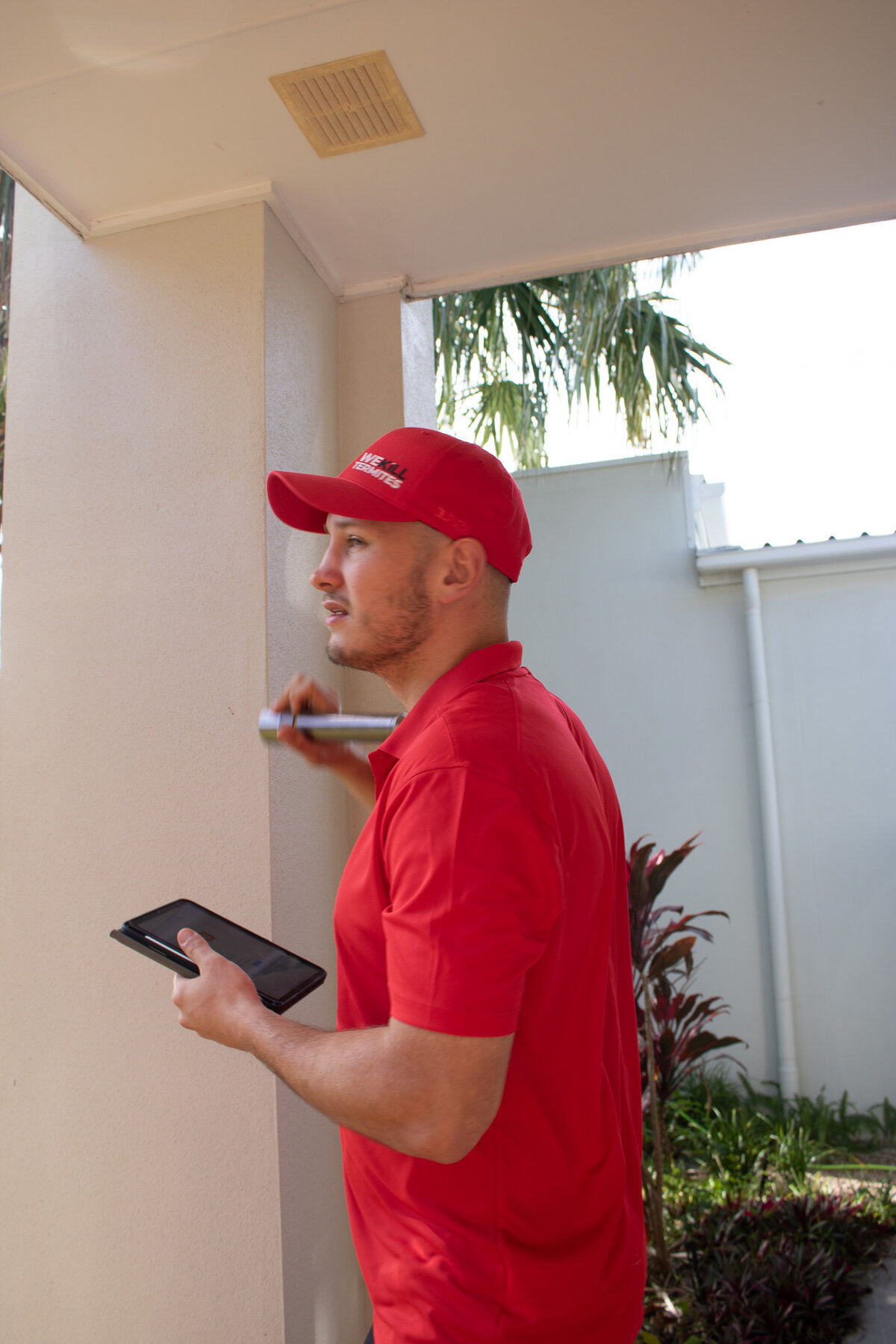
Our comprehensive termite inspections are designed to detect activity at every level of your property, using multiple proven detection methods:
External Perimeter Inspection
We thoroughly examine all external walls, foundations, garden structures, and fence lines for mud tubes, timber damage, and entry points. We check for moisture sources that attract termites and assess soil conditions.
Subfloor & Under-House Access
We inspect crawl spaces, subfloor areas, and pier foundations where termites commonly enter properties. This is where we identify mud tubes and timber damage early, before it reaches inhabited areas of your home.
Interior Inspection
We examine all accessible timber within your home including skirting boards, door frames, architraves, and built-in cabinetry. We use percussion testing to identify hollow timber sections that indicate termite feeding.
Roof Void & Attic Spaces
The roof void is a common entry point and feeding ground for termites. We inspect roof timbers, battens, and framing members using thermal imaging to detect activity hidden from view.
Advanced Detection Technology
Our inspections go beyond visual assessment. We use professional-grade equipment:
- Termatrac Radar Detection: Penetrates timber and walls to detect termite movement and activity up to 100mm inside the structure. Identifies infestations before they breach the surface.
- Thermal Imaging Cameras: Detects temperature differences that indicate termite pathways and active galleries. Particularly effective in roof spaces and wall cavities.
- Moisture Meters: Measures timber moisture levels, as termites require damp conditions. Identifies water sources attracting infestations.
- Precision Visual Assessment: Experienced technicians trained to identify subtle signs: pencil-thin mud tubes, blistered paint, timber discoloration, and wood that sounds hollow when tapped.
Our Inspection Process Step by Step
Understanding what happens during your inspection ensures you know exactly what to expect:
Initial Assessment & History
We begin by discussing your property's history: Has there been previous termite activity? When was the last inspection? Are there signs of water damage or dampness? This context helps us focus on high-risk areas.
Systematic Property Survey
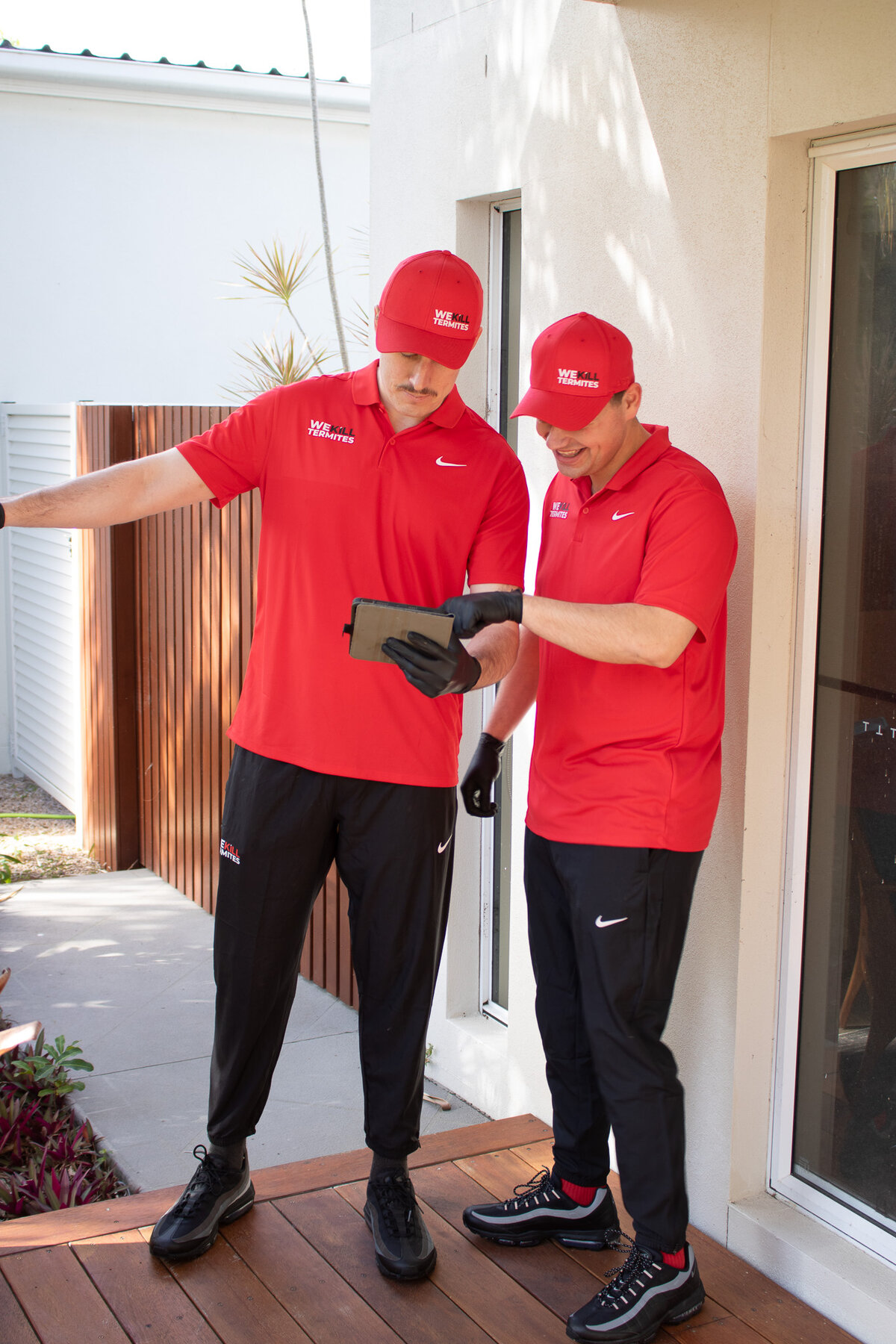
Our technician systematically inspects every area of your property in a methodical sequence: external perimeter first, then subfloor, internal areas, and roof void. Each section is documented with notes and photographs.
Advanced Detection Scanning
High-risk areas are scanned with Termatrac radar and thermal imaging. We test suspicious timber for hollow sections and measure moisture levels. This detailed analysis takes time but ensures we don't miss any activity.
Detailed Report & Recommendations
You receive a comprehensive written report including photos of all findings, moisture readings, and clear recommendations. If termites are found, we outline treatment options. If none are found, we recommend preventive measures to keep your home protected.
Signs You Need a Termite Inspection Now
Even if you don't have an annual inspection scheduled, you should contact us immediately if you notice any of these warning signs:
Don't wait for visible damage. By the time you can see termite damage, the infestation is often well-established. Annual inspections catch activity when treatment is simpler and more cost-effective.
Termite Inspection Pricing
Our termite inspection pricing is straightforward with no hidden fees:
Standard Residential Inspection
Comprehensive thermal imaging and Termatrac detection survey for properties up to 200m². Includes detailed written report with photos, moisture readings, and recommendations. AS 4349.3 compliant.
Book NowCombo: Inspection + General Pest
Termite inspection plus general pest control treatment (ants, cockroaches, spiders, silverfish, and more) on the same visit. Save $80+ compared to booking separately. Written warranty on pest treatment.
Book NowLarger Properties (200-400m²)
Extended inspection for larger homes, multi-level properties, or those with complex floor plans. Includes all detection methods and comprehensive reporting. Phone for quote on properties over 400m².
Book NowWhat's Included in Every Inspection
- Full visual inspection of all accessible areas
- Termatrac radar scanning of high-risk zones
- Thermal imaging survey
- Moisture level testing
- Professional written report with full-colour photographs
- Personalised treatment recommendations (if needed)
- Warranty information and ongoing protection options
No call-out fees. No inspection fee if you proceed with recommended treatment. Bulk inspection discounts available for body corporates and investment portfolios.
Common Termite Species in Brisbane
Understanding the termite species in your area helps explain the risks and appropriate treatment strategies:
Coptotermes acinaciformis (Most Destructive)
This is the species you should be most concerned about. Coptotermes acinaciformis is the most destructive termite in Australia and is widespread throughout Brisbane and North Lakes. They are subterranean, meaning they nest in the soil and travel underground or through mud tubes to reach timber. A single colony can contain up to 60,000 individuals and consume 5-10 grams of wood per day. They work rapidly and can cause severe structural damage within 12-18 months if left untreated. These termites are attracted to timber that's in contact with soil or damp conditions.
Schedorhinotermes (Dampwood Termites)
Schedorhinotermes species prefer damp or decaying timber. They're smaller than Coptotermes but still cause significant damage. These termites don't need soil contact — they can infest timber anywhere in your home, including roof voids. In Brisbane, they're often found attacking timber with high moisture content, around problem areas like leaking gutters, damaged roof timbers, or areas with water seepage. Treating moisture problems is essential when Schedorhinotermes are present.
Nasutitermes (Nasute Termites)
Nasutitermes species are smaller and generally less destructive than Coptotermes, but they can still cause considerable damage over time. They're often found in roof voids and roof framing timber. Unlike subterranean termites, Nasutitermes can travel through open air and don't require mud tubes, making them harder to detect visually. They're active year-round in Brisbane's climate.
Why species identification matters: Treatment approach varies depending on which species are infesting your property. Subterranean termites are treated with soil barriers or baiting systems, whilst dampwood and nasute termites may require different strategies. Our inspections identify the species present, ensuring we recommend the right treatment.
Frequently Asked Questions About Termite Inspections
Termite inspections in Brisbane start from $300 for a standard residential property. This includes a comprehensive thermal imaging and Termatrac detection survey, detailed written report with photographs, moisture readings, and treatment recommendations. Combo pricing is available if you book a termite inspection with general pest control on the same visit — saving you $80 or more. For larger properties, extended inspections are available from $450. We offer no-obligation quotes — contact us on 1300 095 418 to confirm pricing for your specific property.
A thorough termite inspection typically takes 1-2 hours depending on your property's size and construction type. For smaller properties (up to 200m²), inspections usually take around 1 hour. Larger homes or those with complex layouts may take up to 2 hours. This time includes visual inspection of all areas, Termatrac radar scanning, thermal imaging survey, moisture testing, and documentation. We never rush inspections — thoroughness is more important than speed, as missing activity could result in significant damage to your property.
We recommend annual termite inspections for all Queensland homes, particularly in Brisbane and North Lakes where Coptotermes acinaciformis is prevalent. Annual inspections catch activity early when treatment is most effective. If your property has a history of termite activity, is in a high-risk area, or if you notice warning signs, we recommend biannual inspections for extra peace of mind. Properties with active chemical barriers or baiting systems should be inspected annually at minimum to ensure ongoing protection is working. We can set you up with a reminder system to help you stay on top of your annual inspection.
If we detect active termites during your inspection, you'll receive a detailed report with photographs, location of activity, extent of infestation, and clear treatment recommendations. We outline several options: immediate baiting to eliminate the active colony, chemical soil barriers to prevent future entry, or ongoing baiting systems for long-term monitoring and protection. In many cases, we can begin treatment on the same day as the inspection if urgency is required. We'll explain the pros and cons of each option so you can make an informed decision. There's no pressure — we'll work at your pace whilst keeping your property protected.
Yes, a professional termite inspection is absolutely essential before purchasing a home in Brisbane and South East Queensland. Termites can cause substantial structural damage that may not be obvious during a standard property inspection. Previous termite activity might also be present, requiring treatment before you move in. Our AS 4349.3 compliant inspections use thermal imaging and Termatrac detection to identify any current activity or evidence of past infestations, giving you complete peace of mind before exchanging contracts. Many lenders also require a pre-purchase termite inspection before approving your mortgage. We offer rapid turnaround reports (usually within 24 hours) to fit your settlement timeline.